
Service
Correcting subluxations in Vilanova
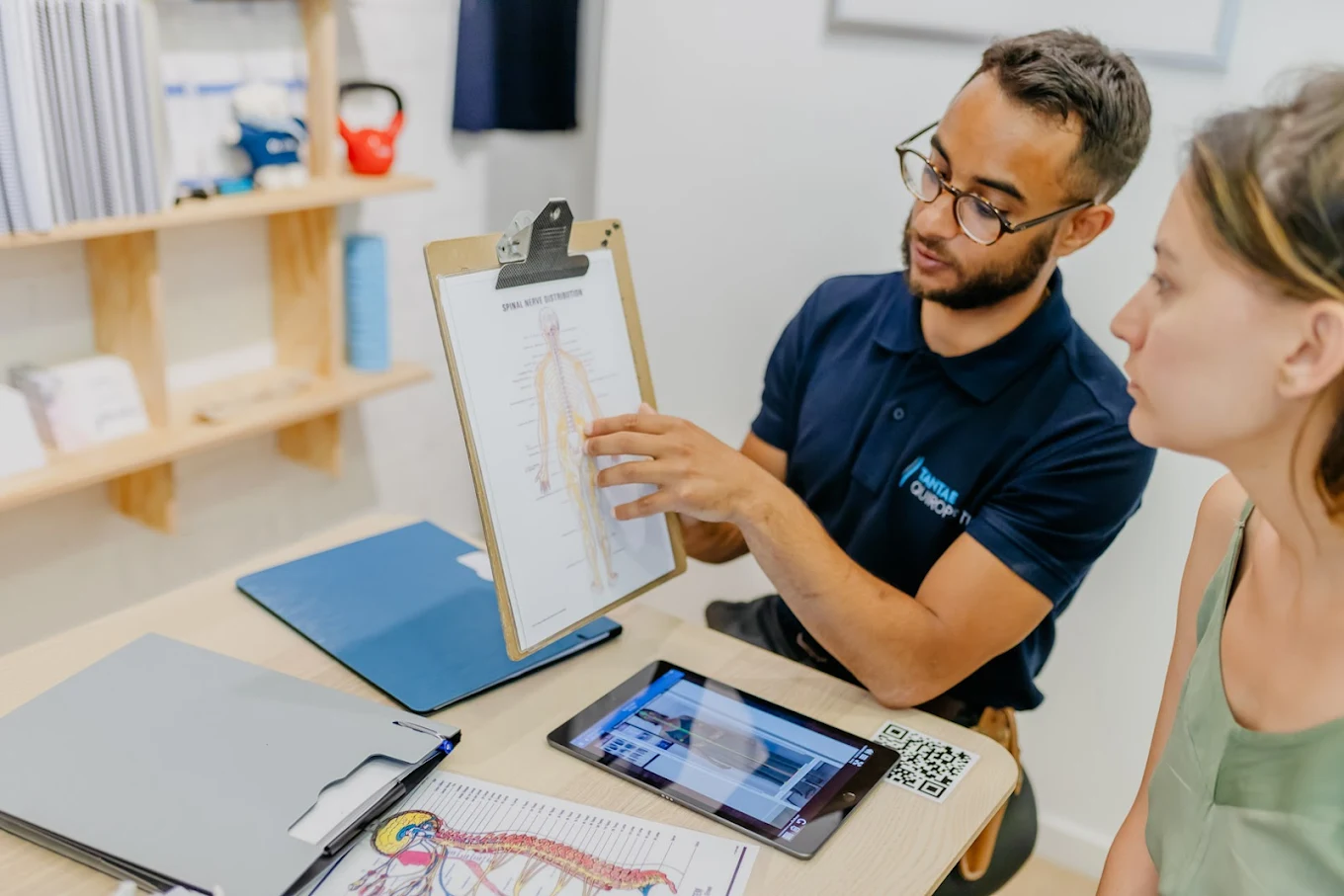
Vertebral subluxations are joint dysfunctions that interfere with the nervous system. Dimitri de Borodaewsky detects and corrects them with specific spinal adjustments to restore optimal nerve function.
Cases we commonly see in consultation
- Chronic muscle tension in the neck, shoulders or back that keeps coming back
- Stiffness or a feeling of restricted mobility in the spine
- Unexplained fatigue or a feeling that the body "is not running well"
- Pain that comes and goes without a clear reason
- A feeling that something is "out of place" in the back or neck
How chiropractic can help you
Vertebral subluxations are silent: you can have them without feeling pain, yet they are interfering with the communication between your brain and your body. The chiropractic adjustment is the only technique specifically designed to detect and correct subluxations. Dimitri carries out a full functional assessment (postural analysis, orthopaedic tests, palpation of the spine) to pinpoint which vertebrae are subluxated and in which direction. He then applies the precise adjustment that restores mobility and relieves nerve pressure. The result is not just pain relief: it is a better functioning nervous system and a body that regulates itself more effectively.
Conditions we help with
What is a subluxation?
A vertebral subluxation is a misalignment or loss of mobility of a vertebra that creates interference in the nervous system. It can be caused by physical stress (trauma, poor posture), chemical stress (poor diet, toxins) or emotional stress (anxiety, chronic tension).
Correcting subluxations
The chiropractic adjustment is a gentle, specific movement on the spine performed by hand to correct the subluxation and restore communication in the nervous system. It is safe for all ages (from newborns to older adults), fast, precise and painless. It often feels relaxing and brings a sense of wellbeing. The adjustment itself takes only minutes, but your body will keep adapting for months.
How we work
On your first visit Dimitri carries out a full examination of your spine and nervous system. We identify the source of the problem and design a personalised care plan.
The first sessions focus on reducing pain and restoring mobility. Visits are more frequent at the start and space out as you improve.
We consolidate the improvements and work on the underlying cause of the problem. Your body learns to maintain the correction and gains lasting stability.
Regular visits to keep your spine in optimal condition and prevent relapses. Like the dentist, but for your spine.
Why choose Tantae in Vilanova
- › Dimitri de Borodaewsky, Doctor of Chiropractic, AEQ Member #1373
- › Member of the Spanish Chiropractic Association (AEQ #1373), guaranteeing European university training
- › 205 Google reviews · 5/5 rating
- › Drug-free, surgery-free — 100% natural approach
- › Online booking: pick a day and time on the calendar
Most adults living in Vilanova i la Geltrú have subluxations without knowing it. Stress, office posture, long hours at the wheel and old injuries build up in the spine. At Tantae we offer a full initial assessment (with 50% off the first visit) so you know exactly the state of your spine and what you can do about it.
Frequently asked questions
¿Cómo sé si tengo una subluxación vertebral?
¿Qué diferencia hay entre un ajuste y una manipulación?
¿El sonido "crack" del ajuste es normal?
Learn more about our chiropractic centre in Vilanova i la Geltrú or discover what chiropractic is →
What our patients say
Testimonial from Eugenio — disc herniation
Testimonial from Engracia — low back pain
Start today.
Book your first visit.
Pick a day and time right on the calendar. No calls required.